Sunday, March 20, 2011

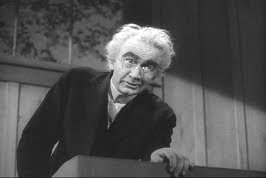
Reel People: Viggo Morteson is Simgund Freud

The film is A Dangerous Method, which is directed by David Cronenberg, with a screenplay by Oscar winner Christopher Hampton, based on his own play (The Talking Cure) and the non-fiction book A Most Dangerous Method: The Story of Jung, Freud, and Sabina Spielrein by John Kerr.

Sigmund Freud

Sigismund Schlomo Freud was born in 1858. He was born in the town of Freiburg in the Austrian Empire (now the small town of Příbor in the Czech Republic).

Sigismund would become the first of eight children to his mother and father. His father, Jacob, 41 at the time of his birth, was a wool merchant and had two children to a previous marriage. His mother was 21. They were a Jewish family, who for the most of his life lived in a predominantly Catholic community. They were not wealthy, but valued education.

Early on in Sigismund's life, there family moved to Vienna, Austria due to international economic turmoil that caused his father to lose his job. Sigismund Freud would attend school, graduate with honors. Despite his interest in studying law, he became a member of the medical faculty at the University of Vienna upon graduation at the age of twenty-four.

This was also the same time period when Freud became a cigar smoker. A trademark habit of the doctor, which would late cause cancer for Freud.

Freud's time in his medical residency provided him the opportunity to work with many different people, including five months with Theodor Meynert a doctor of psychiatry, a field which Freud would later revolutionize.

But the part of his residency that seems the most influential was the final stint, when he pursued his neurological studies abroad in Paris, France under Jean Martin Charcot. Charcot specialized in hysteria as well as practiced the techniques of hypnosis. Freud was interested in much of the work that Charcot was doing, and neurological speciality practice.

After his residency, Freud would marry Martha Bernays (1886). Bernays was the granddaughter of a chief rabbi in Hamburg. They would go on to have 6 children: Mathilde (b. 1887); Jean-Martin (b. 1889); Oliver (b. 1891); Ernst (b. 1892); Sophie (b. 1893); Anna (b. 1895).

As it relates to Freud's family life, Carl Jung had been involved in rumors in the 1890s involving an affair that Freud had with his sister-in-law Minna Bernays, Martha's young sister. There is speculation even today regarding the nature of this relationship.

Freud in his neurological practice, had begun to determine that hypnosis was not a good medical treatment and instead began using what he called "the talking cure." This talking cure treatment method became the start of psychoanalyst, as Freud began to use talking to draw out repressed thoughts from his patients that were unconsciously impacting their mental status.

Interest regarding Freud's work gathered increasing interest, followers, and detractors, particularly as his work would be published. Early work included: The Interpretation of Dreams (1900), Psychopathology of Everyday Life (1901), and Three Essays On The Theory Of Sexuality (1905).

Probably the famous detractor and follower of Freud's work was Carl Jung who embraced many of Freud's ideas, but disagreed because of Jung's commitment to religion, which Freud viewed as unscientific. Jung also believed his method was analytical in he would take what naturally existed and the create categorical representations in the science of what was discovered. He criticized Freud for having theoretical ideas and then seeking out examples that suited his scientific intentions.

Freud's influence and ideas, whether praised or criticized would influence thoughts on gender roles, the influence on sex and sexual development, the creation of the concept of ego and id, religion, libido, cocaine, dreams, repression, and unconsciousness.

In 1923 Freud noticed a cancerous lesion in his mouth, largely believed to be related to his tobacco use. Freud continued to work hard and did much of his influential work during this period.

In 1938 the Germans came to occupy Vienna, and the Freud family, being Jewish was put under house arrest. Only through the influence of friends, were the Freud's permitted to leave Austria and move to London, England.

In 1939 Freud convinced his good friend and medical professional (also a refugee to London), Max Schur, to help Freud commit suicide due to the tremendous pain the cancer as well as the related surgeries had put him in. Schur administering lethal doses of morphine to Freud helped him commit suicide. He would die September 23, 1939 at the age of 83.

A Dangerous Method

The film A Dangerous Method occurs prior to WWI, and tells the story and interaction of Sigmund Freud, Carl Jung, and one of Jung's students Sabina Speilrein. Speilrein, a psychologist is said to have influenced both Freud and Jung. Freud deriving his concept of "death drive" from her, and Jung developing his concept of "transformation" from her.

In addition to Viggo Mortensen playing Freud (in his third collaboration with David Cronenberg, this following A History of Violence and Eastern Promises), Michael Fassbender will play the part of Carl Jung, Keira Knighley will play the part of Sabina Speilrein.

Other stars include Vincent Cassel who will portray Otto Gross a young psychologist who studied under Freud, and Sarah Gaddon as Emma Jung, the wife of Carl.

Viggo Mortensen scored an Oscar nomination for a Russian mafia member in Eastern Promises, now as an Austrian doctor will he score another nomination and perhaps a win for his portrayal of this Reel (Real) Person?

Thursday, March 17, 2011

Personal Response to "The Gospel According to St. Matthew (1964)"

I recently watched the 1964 Italian film The Gospel According to St. Matthew directed by Pier Paolo Pasolini.

I'm not sure what originally put this film on my radar, but I've been interested in watching it for awhile. This film is unique in that it tells the story of just one of the Gospels (Matthew, as indicated by the title) instead of combining the story of Jesus as told in the four Gospels of Matthew, Mark, Luke and John.

This film in Italian (with subtitles) in black and white is not told with any sort of speed, in fact it can be quite drawn out in it's telling, for example, the film starts with some lingering shots of Joseph and the pregnancy Mary looking back at one another prior to Joseph walking away and encountering the angel Gabriel who helps explain Mary's pregnancy to him.

It is said that Pasolini, an atheist, homosexual, and Marxist, read the four Gospels in a hotel in 1962 and felt compelled to make a movie about one of the Gospels. He felt like John was too mystical, Luke too sentimental, and Mark to graphic.

As a result, he chose Matthew, and it is interesting because if there is one thing I took away from this film is the way in which different images of the Christ story, can take the same passage filmed and imaged in books and art over and over, and still provide something different.

Now, I wouldn't encourage the idea of artists superimposing things falsely into the story of Jesus, and it's not like Pasolini placed a UFO encounter in the story or took a liberal view of the story. Instead, I felt like Pasolini approached the project with the integrity to tell the story as it was written with his own images.

And I must say, Pasolini's visions are different than some I imagine. There are some things, I just have barely taken the time to imagine, like the images of the killing of babies at the order of Herod after Jesus was born, and I've never really taken the time to absorb the length of time Jesus would be teaching at times with people gathered around him, but the way that Pasolini presented the sermon on the mount with cuts between the teachings created a unique image that I imagine will stick with me.

Other times, Pasolini's images were simply different then I had ever seen before, that didn't match the typical presentation I'm familiar with. The strongest example of this is the way in which John the Baptist was presented far different then I've ever seen before. This John the Baptist sprinkled instead of emerged the Baptized, and he was far more subdued and reserved than the wilder image presented in other tellings.

In watching this film with a friend, there was definitely a time when we watched it through a Mystery Science Theater 3000 lens, often finding some scenes just straight up comical, including some camera work that seemed to loose a disciple or two and search for them with the lens, or the lingering shots of faces that occasionally surprised you. Oh yes, and there's also the issue of the unibrow that is for some reason drawn on the face of Jesus (Enrique Irazoqui).

But beyond the unibrow, there is definitely an aspect of Jesus in this film that seems abrasive and not so endearing. It's wasn't an over-the-top abrasiveness, but more of an arrogance and introspectiveness that I found somewhat challenging compared to my personal perspective on the personhood of Jesus.

All the same, whether it's a different view of Jesus or the influence of 1960s Italian film making, it makes for an interesting case for where and how on a personal level we have derived the image of who Jesus is and what his time on earth was truly like. I'm sure we often superimpose many images, ideas, and our own times on the original text. It made me at least begin the process of thinking about my own mental images of the Jesus story and challenging what cultural images I may have superimposed on the story of Christ.

Wednesday, March 16, 2011

10 Thoughts After 10 Days of Twittering


Here's my first ten reactions to Twitter after opening an account and engaging in the world of Twitter for my first 10 days.

1. Quick Source for Emerging News - During this first 10 Days the serious disaster in Japan struck and people were quick to tweet and retweet news as well as general sentiments and thoughts ranging from the most current news on earthquakes, nuclear meltdowns, and tsunami waves coming to the United States.

2. Serious News not Always Handled Seriously - Some people seem to love to combine the trending twitter keywords into little paragraphs. So you see a shockingly high number of tweets that read "#whosaiditwasokay to promote #super8movie when we should #prayforjapan."

3. Love to Talk to My Friends on Twitter, But... - ...Only so many friends are on twitter, so the opportunity to engage with a wider group is limited to what would be available on Facebook.

4. A Different Type of Conversation - Even thought you're missing some of your facebook friends, the twitter tone is different and there's more freedom to discuss and interact. Facebook seems like a great place to talk about the simplest personal things in a public forum (here's a picture of my dog/baby; a funny story from today; can't wait to hang out with friends, etc) where as Twitter provides the freedom to tell a joke, share links to websites, discuss news, etc. in a way that would seem inappropriate for the friendly and non-complicated cordial environment on facebook.

5. Welcome to Twitter World - I'll admit, that pre-twitter there was an avenue of conversation that I was missing out on. There are a few people who I know who are on twitter and use the site actively. I am so glad to be able to connect with them through this medium that they are already long-active in using. With the frequent twitterers there is a comforting sense of connection that I feel seeing and knowing what every day life looks like as told through their tweets. And beyond those people, now I can talk to Ellen Page or Anderson Cooper...if I wanted to.

6. A lot of talking but is anyone saying anything? I feel like there is a lot of personal promotion (I'll admit I readily share links to strangecultureblog.com as part of the backstage pass, which is the premise for the twitter account) and if it's not promotion its a lot of talk about stuff that an entire page of tweets might have nothing worth commenting on or retweeting.

7. A lot of talking but is anyone listening? The ease of slapping up a 140 character tweet is pretty easy, but does anyone care you can't figure out what icecream you want, or your tired, or your sad about x, y, or z? Twitter creates the potential for community, but it's hard to hear in all the static.

8. It's easy to tweet. One of the greatest things about twitter is how easy it is to slap up a message. Not only is the forum so open you can say practically anything, it was easy to set up an accont to message from my phone or via text message.

9. It's easy to tweet something stupid. In your head it seemed so good until you hit send and it was up. Or maybe you had post-tweet regret days later. All I know is that things seemed so smart, creative, or funny when I was typing them and then I later felt like my message could easily have been misconstrued or just missed completly. Not to mention, there's a pressure to be funny or insightful in 140 words and sometimes what seemed great ends up falling very, very flat.

10. A hope for connections. I look forward to having a new avenue to stay connected to StrangeCulture readers and establish more readers through Twitter. I think the potential is there, but I am still learning, and pleased to have acquired a healthy group of followers right off the bat. I think the opportunity for people to engage with StrangeCulture post before and after they are written can extend the conversation, and provide some quick feedback that I look forward to hearing and kicking back and forth. Not completly sold on the magic of twitter, but am still willing to stay in the game.
I invite you to follow me...username is StrangeCulture.

Tuesday, March 15, 2011

Reel People: AnnaSophia Robb is Bethany Hamilton

The film is Soul Surfer directed by Sean McNamara, based on the book Soul Surfer: A True Story of Faith, Family, and Fighting to Get Back on the Board by Bethany Hamilton, Rick Bunsch, and Sheryl Berk.

Bethany Hamilton

Bethany was born to Tom and Cheri Hamilton on February 8, 1990 in Kauai, Hawaii. Her parents, both surfers, had moved to Hawaii due to their own interest in surfing.

So with her two brothers (Noah and Timmy) and surfing parents, Bethany Hamilton was destined to at least attempt surfing. Not only did she attempt surfing, but began entering surf contest at the age of eight, where she would win competitions in the short and long board categories over the next five years. She even picked up a sponsor (Rip Curl) and began to have dreams of professional surf career.

On October 31, 2003, at the age of 13, Hamilton was attacked by a tiger shark while surfing with the now pro surfer Alana Blanchard and Blanchard's parents. The tiger shark severed Bethany's left arm just below the shoulder. Hamilton was said to have lost over sixty percent of her blood that day. Tom Hamilton was supposed to have knee surgery that day, but Bethany took her father's place on the operating table and her life was saved, and her arm amputated.

In less than a year, Bethany was back to surfing and pushing herself to compete at a competitive level and placing in a number of competitions.

In addition to regaining her surfing legs and competing, Bethany's became a popular inspirational story on the media circuit appearing in a number of different media outlets, including 20/20, Good Morning America, The Oprah Winfrey Show, Ellen, and the Tonight Show. She also took a strong stand to use her situation to share how her triumph and perseverance came from her faith in Jesus.
In 2006 she published her biography with MTV, Soul Surfer.
In 2007, Bethany Hamilton went professional in the sport of surfing, in which she continues to surf professionally, as well as work with her foundation (Friends of Bethany) as well as write other books including her upcoming Christian devotional Soul Surfer Devotions.
Soul Surfer

In the film AnnaSophia Robb plays Bethany Hamilton. Bethany Hamilton's parents are played by Dennis Quaid and Helen Hunt.

In the film Carrie Underwood plays the part of Sarah Hill, a missionary who had previously broke her neck and back in a surfing incident, and after attending Calvary Chapel Bible College moved to Kaui in 2001 to become a missionary, founding Kaui Child, an organization geared towards reaching kids on the Hawaiian Island.

The film also features a role for Craig T. Nelson as Bethany's orthopedic surgeon.

Not quite an award contender film (but definitely a biographical film), I can't help but ask if AnnaSophia Robb will receive any type of award attention for portraying this Real (Reel) Person.

Monday, March 14, 2011

Reel People: Meryl Streep is Margaret Thatcher

The film is The Iron Lady, which is an original work written by Abi Morgan and Michael Hirst. The film is directed by Phyllida Lloyd (Mamma Mia!).

Margaret Thatcher

Margaret Roberts was born October 13, 1925 in Lincolnshire in the United Kingdom. Her father Alfred Roberts was a grocer, Methodist lay preacher, and later became involved in local politics as an alderman and Mayor.

Margaret was the second of two girls in her family, her older sister Muriel was four years older.

After primary school she won a scholarship to Kestevan and Grantham Girls School where in addition to receiving good scores as a student was involved extracurricularly in swimming, hockey and poetry. She would go on to Somerville College in Cambridge, where she would study Chemistry. Initially she was denied admittance, but reconsidered after another candidate withdrew.

Studying chemistry, and specializing crystallography, she would graduate and move to Colchester, England as a chemist for BX Plastics.

In 1949 attending a Paint Trade Federation function in Dartford, Margaret met Dennis Thatcher. At this time Margaret Roberts was a newly selected parliamentary candidate. Dennis was a successful businessmen who had recently been divorced (married to Margaret Kempson 1942-1948).

As Margaret started campaigning for parliament, she was supported by Dennis. They would get married in 1951. In the early 1950s Margaret Thatcher could not gain a set in Parliament, but did get the opportunity to go to law school, where she qualified as a barrister specializing in tax law in 1953. In 1953, Margaret also gave birth to twins Carol & Mark.

After many campaigns, Margaret became a member of parliament in 1959 for Finchley. Margaret would serve in this seat during her entire time in Parliament, representing the conservative party, with a keen eye on spending and lowering taxes. Her prominence rose when she became Education Secretary in 1970. She made firm and sometimes unpopular choices in this role (such as no longer provide free milk for children aged seven to eleven. Giving her the nickname 'Margret Thatcher, Milk Snatcher').

In 1979 after four years of being the leader of the opposition party, the conservatives won a 44 seat majority in the house of commons and Margaret Thatcher was selected to be the prime minister, making her the first female prime minister of the United Kingdom. She officially began as prime minister on May 4, 1979.

Margaret Thatcher would service as the Prime Minister for over 11 years. In addition to continued emphasis on the economy, privatization, and education, she was also the prime minister in the final days of The Cold War and worked closely with American President, Ronald Regan on policies towards the Soviet Republic. A defining part of her presidency also involved the Falklands War when Argentina invaded the Falkland Islands. Thatcher also had to deal with strikes by energy and industrial sectors, primarily the coal unions, due to her stances related to limiting the unions.

In 1990 Thatcher resigned as prime minister after her party began challenging her, largely due to low approval ratings and some of her personal convictions, primarily related to her refusal to agree to a timetable to join Europe's single currency system. In tears she left 10 Downing Street and her Chancellor John Major succeeded Thatcher. Thatcher remained in parliament for the next two years for Finchley before retiring at the age of 66 in 1992.

In the following years Thatcher continued to enter the political spotlight at times whether that's has been making speeches, appearing at important functions, or being honored by her country.

In 2002, Margaret Thatcher had a series of strokes and was advised not to make any more public speeches.

Denis Thatcher died June 26, 2003 of pancreatic cancer.

Margaret Thatcher remains a member of the House of Lords with the distinguished title of Baroness Thatcher.

The Iron Lady

In the film The Iron Lady the film is said to tell the story of Margaret Thatcher as prime minister, largely through flashbacks. Meryl Streep plays Margaret Thatcher. Denis Thatcher (Margaret's husband) is played by Oscar winner Jim Broadbent.

Other British political figures that will be portrayed in the film include Geoffery Howe, Michael Hesltine, Michael Frost, John Nott, & Francis Pym.

Will the perpetually nominated Meryl Streep get nominated for her portrayal of this Real (Reel) Person?

Sunday, March 13, 2011

Real (Reel) People Win Oscars: 2011 Edition

When it comes to win an Academy Award, recent years have shown that not any bio-pic performance means a guaranteed nomination, but if you get nominated for your performance playing a real person, then there is a good chance you will win.

Of the past 10 years (20 Lead Actor/Actress winners), 12 of these winners have won for playing real life people. That's 60% of winners since 2001.

• In 2010 Colin Firth played King George VI, stuttering British royalty at the dawn of the radio era and won for Best Actor.
• In 2009 Sandra Bullock played a surprise hero as the Southern mother Leigh Ann Tuohy and won for Best Actress.
• In 2008 Sean Penn played controversial politician Harvey Milk and won the Oscar for Best Actor.
• In 2007 Marion Cotillard played French singer Ediath Piaf and won the Oscar for Best Actress.
• In 2006 Helen Mirren played Queen Elizabeth II and won the Oscar for Best Actress.
• In 2006 Forrest Whitaker played Ugandan dictator Idi Amin and won the Oscar for Best Actor
• In 2005 Reese Witherspoon played country music celeb June Carter and won the Oscar for Best Actress.
• In 2005 Philip Seymour Hoffman played author Truman Capote and won the Oscar for Best Actor.
• In 2004 Jamie Foxx played musician Ray Charles and won the Oscar for Best Actor.
• In 2003 Charlize Theron played prostitute/serial killer Aileen Wuornos and won the Best Actress oscar.
• In 2002 Adrien Brody played Jewish pianist Wladyslaw Szpilman and won the Best Actor oscar.
• In 2002 Nicole Kidman played author Virginia Woolf and won the Best Actress oscar.

The non-biopic winners: Natalie Portman (Black Swan), Jeff Bridges (Crazy Heart), Kate Winslet (The Reader), Daniel Day Lewis (There Will Be Blood), Hilary Swank (Million Dollar Baby), Sean Penn (Mystic River), Denzel Washington (Training Day), Halle Berry (Monster's Ball).

I wouldn't expect 2011 to be different. As a result we can almost plan on either Best Actor Oscar winner or Best Actress winner going to a performer who played in a biographical film as a "Real (Reel) Person."

2011 Real (Reel) People Performances:

Reel People: Hiam Abbass is Hind Husseini
Reel People: Matt Damon is Benjamin Mee
Reel People: Leonardo DiCaprio is J. Edgar Hoover
Reel People: Ralph Fiennes is Gaius Marcius Coriolanus
Reel People: Ben Kingsley is Georges Méliès
Reel People: Rhys Ifans is Edward de Vere
Reel People: Liya Kebede is Waris Dirie
Reel People: Keira Knighley is Sabina Spielrein
Reel People: Viggo Morteson is Simgund Freud
Reel People: Haley Joel Osment is Helmuth Hübener
Reel People: Robin Wright Penn is Mary Surratt
Reel People: Brad Pitt is Billy Beane
Reel People: Andrea Riseborough is Wallis Warfield Spencer Simpson Windsor, Duchess of Windsor
Reel People: AnnaSophia Robb is Bethany Hamilton
Reel People: David Strathairn is William J Flynn
Reel People: Meryl Streep is Margaret Thatcher
Reel People: Rachel Weisz is Kathryn Bolkovak
Reel People: Michelle Williams is Marilyn Monroe

Click to links to see the previous Real (Reel) People projects from 2010, 2009, 2008 and 2007.

Friday, March 11, 2011

War Horse by Michael Morpurgo: The Book and Pre-Thoughts on the Film Adaptation

I recently read the book War Horse in preparation for the upcoming film adaptation directed by Steven Spielberg.

The book War Horse by Michael Morpurgo is a young adult fiction book. Told from the perspective of a horse just prior to and during WWI in Europe.

Now, to be fair, I'm one who normally doesn't find themselves liking "animal movies" and while there horse movies can have a different flavor, I don't know that I've ever read with a horse as a narrator. In the case, the narrating horses name is "Joey."

And so while the book generally bored me to tears and made me imagine a Black Beauty or National Velvet type of story might have the same feel, as the story got moving along my feelings began to change.

The first change in my feelings occurred, when I realized that what Morpurgo was doing was going to be moving this horse in the midst of a variety of characters, and the somewhat pathetic obsessive young boy who loves the horse in the early stage of the story (Albert) was not going to be in the book the whole time. And instead, through the changes that occur in the horses life.

In this way the book reminded me of the movie The Red Violin that follows the object (the violin) through time with various settings and characters. This film was similar in that regard, with the exception that the horse was a character with a name, thoughts, and an internal voice. But like an object it had little ability to impact it's own personal situation, had limited ideological allegiance, and like an object had the capacity to be owned (and trade hands among various owners).

The second thing I found myself appreciating in this story was that how an animal narrator, particularly in the harsh setting of war, could have a unique role in the way that Morpurgo wrote the character of the horse, Joey. Because the various owners and carers of Joey formed an emotional connection to the horse, the human characters in the book often speak openly with the horse as though he were a trusted confidant, giving the opportunity to really know the inner thoughts of all the other primary characters in the story. As they share and Joey relays to the readers what he has heard, this first person perspective truly is able to present a more omnipotent perspective into the various characters in the story.

So as this story unfolds, the simple perspective it presents of WWI, with some themes one might expect in a young adults fiction novel unfolds, you find that the story is still quite touching and enjoyable.

This book was written in 1982, and 25 years later this story made it's way to the London stage after Nick Stafford wrote a stage adaptation with some unique life size stage horses which can be seen in the YouTube video below. The play then came to the West End and Broadway.


After Kathleen Kennedy saw this play in London, she told Steven Spielberg who bought the rights to the book, which is being adapted independently for the film expected later this year.

Having read the book, it is clear that a film or stage adaptation will have a different flavor for a couple reasons. The first is that the element of horse narration will be lost. The second is that as a children's novel much of the brutality of war can be easily glossed over with simple lines that summarize briefly battles, death, and animal brutality. But in a film version, a picture is worth a 1000 words, and the pictures of these war sequences will have a different flavor in color than with simple words (from the perspective of a horse).

And so the final product will admittedly be different from the initial 1982 packaging, and I can imagine that being ruined in many ways, or hopefully under the hands of the respected director Steven Spielberg, and the Oscar nominated screenwriters Lee Hall (Billy Elliot) and Richard Curtis (Four Weddings and a Funeral) the final project will be it's own masterpiece.

Film still from Dreamwork's War Horse via The Film Stage site.

Thursday, March 10, 2011

Spiritual Leaders in Film: Pastor Rosier Pile (Walter Brennan) in Sergeant York

Walter Brennan's Oscar nominated role of Pastor Rosier Pile in the film Sergeant York is certainly interesting, and I even say a praise worthy performance and great film role.

As a biographical film, I'm uncertain as to what degree of care was put into the creation of this character, because at first glance there are many parts of this rural minister that are quite stereotypical. He's hand waving, country church preaching much of his screen time. He's soft spoken. He's sensitive in a way no other male character in the film is, particularly in his interaction with Mother York (Margaret Wycherly).

But despite some of the stereotype, I'm not critical. Some pastors are hand waving speakers. Some pastors are known for their preaching. Some are soft spoken. And some are sensitive, particularly to old women.

But what I like about this character in the film is that in addition to all these things, he is also unafraid to be honest, and handles a rough guy (like the pre-conversion Sergeant York) with a care and honesty that I felt like was moving. He didn't gloss over the truth, but he didn't condemn. Rather, you could tell it was a love for the York family, including Alvin York (Gary Cooper), that helped lead him to repentance.

I like that this image of Pastor Rosier Pile doesn't end his interest with Alvin York at the moment he experience conversation. I like the fact that in interaction isn't solely for him to attend church (although that is an interest of the Brennan's character). Instead, he truly seems interested in helping Alvin York experience full life transformation, that will impact every aspect of his life.

Another aspect of Walter Brennan's character is that while he he is the minister to the community he also the owner of dry goods store. I don't know why I am drawn to this aspect of his character, perhaps it's because it helps break up the stereotypical character, and even give him a sense of cultural relevance that he is capable of having a trade in their community that doesn't depend on the attendance in his white painted chapel.

I wish there were more films that had characters like Pastor Rosier Pile in them. Often biographical films have a spiritual element, because our spiritual self's influence what we do, as we see in the life of Alvin York. For some reason, in modern fictional films, film makers and writers seem to fail at writing in interesting characters like this into their stories, and if they do, they stick to the stereotypes.

Other previous posts about spiritual leaders in film:

Wednesday, March 09, 2011

Two in A Row Colin - Probably Not

Colin Firth was nominated for an Oscar in 2010 for A Single Man and won in 2011 for The King's Speech.

Which has led me to wonder if he might have the chance to be a double winner this next year?

9 men have won two best Actor Oscars: Spencer Tracy, Fredric March, Gary Cooper, Marlon Brando, Dustin Hoffman, Tom Hanks, Jack Nicholson, Daniel Day-Lewis, and Sean Penn.

Of those 9, two won their Oscars back to back (Spencer Tracy 38/39 and Tom Hanks 94/95).

Now, looking at Colin Firth's upcoming filmography, I don't think Firth will be nominated again this upcoming year or win, but I don't under estimate Firth's sudden rise to prominence, and something tells me whether it's lead or supporting, that Firth is not done with Oscar, even if it's just a nomination some time down the road.

But could he follow up with an award this year? Probably not.

Colin Firth shows up in the spy film, directed by Swedish director Tomas Alfredson, Tinker, Tailor, Soldier, Spy, based on the novel with the same name by John Le Carre.

But more curious to me is Firth's role in the film The Promised Land, a biopic and police thriller set in Tel Aviv in 1942. Colin Firth's role seems to be supporting, but the information on this project is limited, and so you never know.

And then beyond that, all other projects seem like they'll be 2012 films...all with some better potential for Oscar love...The Coen Brother's film Gambit, Neil LaBute's Seconds of Pleasure, or even Chan-wook Park's Stoker.

Tuesday, March 08, 2011

Two in A Row Natalie - NO!

When it comes to lead actresses and multiple wins, a few ladies have this honor.

Katherine Hepburn won 4 Oscars.

11 woman other women have one two Oscar trophies ( Luise Rainer, Bette Davis, Olivia de Havilland, Vivien Leigh, Ingrid Bergman, Elizabeth Taylor, Glenda Jackson, Jane Fonda, Sally Field, Jodie Foster, and Hilary Swank).

Two of those won back-to-back Oscars (Luise Rainer 37/38 & Katherine Hepburn 67/68).

Will Natalie Portman join this group of ladies after her win for Best Actress in the film Black Swan?

I can tell you now, the Answer his NO. I have posted an image of her 2011 filmography, and with three films not one offers her a chance.

Natalie Oscar winning "follow-ups."
  • No String Attached
  • Your Highness
  • Thor

Monday, March 07, 2011

For The Birds - Tweet!

So, Twitter's like "old school" in the world of hot new trends, but for some reason I put it int the category of "how much social networking does a guy need?"

But for the last couple years people have been encouraging me to Tweet.

If you have any tips, secrets, or idea for the twitter feed of StrangeCultureBlog.com feel free to share your ideas.

In the meantime feel free to follow me...username is StrangeCulture.

Sunday, March 06, 2011

Sergeant York: A War Story, An American Story, a Faith Story

Recently, having a film conversation with my pastor and his wife, they mentioned their interest in the film Sergeant York. I asked why they liked it and they said "we like the film because it's a compelling film. It's a large scale Hollywood film, it's an entertaining, well told story, and shares the gospel message of Christ in the film, very clearly."

Because I've been catching up on my cinema from the 1930s and 1940s, the recommendation put this film instantly on my radar.

This film is directed by Howard Hawks and tells the real life Sergeant Alvin York, America's most decorated WWI veteran.

Beyond the element of faith, what I found most interesting about this film was that the film is marketed, even it's name as a war story with taglines about fighting, tanks, and guns. Most pictures from the film are stills like the one above with Gary Cooper either in battle or decorated as a war hero.

But while the climactic battle seasons with Cooper as Sergeant Alvin York are one of the turning points in York's story (on the screen and in real life), this image of York is "What He Did" while the true image of York (the "Who He Is") is a struggling Tennessee farmer with a powerful conversion from a violent drunk troublemaker to a man who wanted to do right by his family, his fiancee, and the Lord.

A more appropriate image for this film would be one like the one here, that shows Cooper as a simple man in Tennessee trying to find someway to change his caste in life by earning enough money to buy up a piece of bottom land and win the heart of the girl he loved (Gracie Williams, played by Joan Leslie).
But billed as a war story, it's okay too - because it's that type of story as well, yet I don't think as an audience you watch cheering for for York to win the war, I think you cheer for him hoping he can get himself a piece of bottom-land in the valley.

In my assessment, more than a war story, this is actually an American story. A story of American freedom, what that means in the scope of time and history. When it comes to war the aspect of war, war is a piece of that story, not the entirety of the story.

In terms of the faith aspect of the story, is that faith is not used as a marketing strategy in this film, but instead as a historical film about a real person, the reality of York's faith is a dramatic part of his story and a continuous thread in his life. His conversion experience isn't the climax, but rather the catalyst for the changes in his life that help make York who he is supposed to be.

This not only makes for powerful story telling, but also a powerful story. And it seems that the most compelling films about faith are the true stories, where film makers tell the story of someone the way that they are and faith is a part of their character. In fictionalized stories it seems like authors tend to ignore the aspect of faith in the creation of characters, unless it is to create a certain type of stereotypical supporting character. Yet, in real stories, like the stories of Alvin York the peaks and valleys of his own experience with God are as much a valid part of who he is, as where he lived and what family he came from.

In this regard, York's real story plays out in a powerful way that I'm sure spoke out to audiences in 1941, particularly as another great war was beginning in Europe, but I think there is room for this film to challenge contemporary film watchers 70 years after it's initial release.

Friday, March 04, 2011

Contemporary Smart Phone Protocol: 13 Questions Regarding Cell Phone Ettiquette

I write this post with no one person in mind.

But I have a feeling you will relate.

The explosion of cell phone users of all ages and with all types of social needs and desires creates a huge sudden divergence in what is perceived as acceptable etiquette, protocol, and just general rules of conduct.

Here's the questions that I imagine different people have different "rules" for and I don't think everyone's playing with the same rule book.

Here are 13 Questions for the Current Communication Age

1. If you are with other people and you get a text message, do you check it?

2. If you are with other people and you get a text message do you check it, and respond?

3. If you get a text, do you have to respond? What if there's not question?

4. If there's a lull in the conversation with friends can you get out your phone and play a game with one of your favorite iPhone apps?

5. If you know that someone has a phone glued to their hip and they don't respond to the e-mail you sent to their blackberry should you be concerned?

6. If you call, should you leave a message, or will they call back if they see they missed a call?

7. If you get an e-mail is it better to respond on your phone with a shorter more reactive response or should you wait until your at a desk top computer to write a more thorough and grammatically conclusive response?

8. If your phone is out and your getting an incoming call, can someone else pick it up and tell you who's calling?

9. If you do get a voicemail is there an expected turn around time for a return call on the basis that you do have your phone with you everywhere you go?

10. Is there a standard cut off time for when you can make a call? Send a text?

11. If someone ask a question and the fact can be found on your phone, is it appropriate to do the google search there or should you not cause a break in discussion?

12. Can you respond to a message in one medium (say a voicemail) with a response with another phone medium (say a text message or e-mail)?

13. Can you use your Blackberry in the bathroom?

Wednesday, March 02, 2011

The Invention of Hugo Cabret

The 2011 holiday season will have a Martin Scorsese film released called Hugo Cabret. The main character Hugo isn't a gangster or gritty violent villain. In fact no drugs, sex, violence, or intense language. And it doesn't take place in New York city.

The film is based on The Invention of Hugo Cabret by Brian Selznick. This book falls into the category of books that typically lacks some glamour...as a young adult novel. Although, as a young adult novel, it has won a unique prize. The Caldecott Medal, which is an award given by the ALSC (The Association for Library Services to Children) honoring art in children's books.

This book is rather short (with 24 short young adult sized chapters), but on the shelf, this book has a massive presence at 533 pages. That is because author Brian Selznick also serves as illustrator with captivating pencil art throughout the book, often taking the place of written narrative and telling the story instead of words themselves.

There are certainly plenty of things to discuss, particularly as it relates to film and this being made into a movie by Scorcese, but focusing on the book itself, let me provide a brief outline.

The story takes place in Paris, France in 1931 and deals with a young boy who lives secretly in a train station by himself, after some unfortunate events. Here, he cares for the clocks in the train station and because of his fascination with machines, and a unique machine he has acquired he sometimes steals toy parts from a cranky toy store owner.

This sets the stage for a series of events, that while at time fit together just a little bit too perfectly creates for an interesting story.

Where this film becomes particularly interesting (a part from a few expected and unexpected turn of events) is that as you get into this story the historical nature of this book begins playing out.

The film actually has a great deal to do with early cinema, particularly the French inventor/magician/film maker Georges Méliès who many would credit as being the first film fantasist or the man who made the first science fiction film.

The film that Méliès is most associated with is a short film called "A Trip to the Moon (French title "Le Voyage Dans la Lune"), about just that, a group of men who travel to the moon being shot in a giant cannon...with a rocket the lands in the eye of the moon.

It is clear that as you get into the book, that Brian Selznick's intention in writing his story is to introduce readers to Méliès and play with many of the themes of Méliès life (invention, magic, and the movies).

As one of this years books that is being taken from fiction to film, I find this to not only be an interesting choice for Martin Scorches (3D and all) but I think is one that will make a great transition and really could be one a real gem.

There was obviously something that captured Scorsese's interest early on, as this book only was released in 2007, but Scorsese has really assembled an A-list cast from the young stars (Asa Butterfield and Chloë Moretz) to the seasoned veterans with important roles in the story (Ben Kingsley, Christopher Lee, Jude Law, Richard Griffiths, Emily Mortimer, Helen McCrory, Frances de la Tour, Michael Stuhlbarg and Ray Winstone). Not to mention a screenplay adaptation by double Oscar nominee John Logan (Gladiator and Aviator).

But this story in many ways has to be a family flick, I can't picture it any other way after reading it, nor would I want it "adulted up" in any way. I think the story works, and I can easily see it filling and fitting into a feature length context. I could take it or leave it when it comes to 3D, but since it's about invention and the technology of cinema, I think I'm even okay with that decision as well.

Check out this book when you get a chance. I'm not done talking about it. And give it a little bit and I have a feeling you'll start hearing more about this book and the film.