Wednesday, March 31, 2010

Jaime Escalante - Farwell

If there had ever been StrangeCultureBlog in 1988 you would have seen a "reel people post" about Edward James Olmos playing the part of Jaime Escalante.

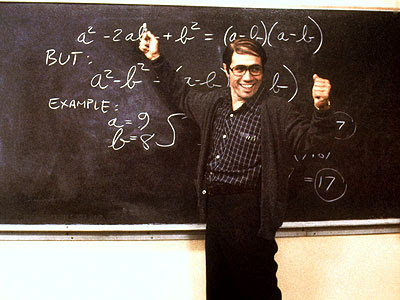
Jamie Escalante wasn't anyone you may have known about until the film Stand and Deliver came out that told Escalante's story, a true story about an inner-city math teacher in one of the roughest schools in LA who taught struggling students math and helped them earn passing scores on the Advanced Placement Calculus exam.

Because of the nature of the school and the students there was much controversy over the scores and the passing students retook the test to prove there scores were not earned in error.

Jamie, the real teacher played by Oscar nominated Olmos, died yesterday of bladder cancer in Sacramento. At the age of 79.

If there was ever a reason for biopics it is for inspiration films like Stand and Deliver. Inspiration is far more inspirational when it's real and told in an engaging way.

Jamie, thank you for your story and life. Ramon Mendez and Tom Musca, thank you for telling it in your film.
Top picture is Olmos in the film, picture to the right is Jamie Escalante.

Monday, March 29, 2010

Reel People: James Franco is Allen Ginsberg

The film is Howl, which is written and directed by the team of double documentary Oscar winner Rob Epstein and Jeffrey Friedman.

Allen Ginsberg

When Allen Ginsberg was born in 1926 to a Jewish school teacher father and communist mother in New Jersey it was a different time then the era he would later influence.

Ginsberg was influenced from his father's poetry and some of the unique experiences from his mother Naomi going to therapy for mental illness and as a result, and a high level of social concern.

In 1943 Ginsberg attended Montclair State College shortly before attending Columbia University on scholarship. Here at Columbia, he had the opportunity to meet beat poets including Jack Kerouac, Neal Cassady, and William S. Burroughs.

In 1948 Ginsberg had an auditory hallucination in his Harlem apartment where he heard various portions of William Blake poetry, that became a defining moment of his life.

In 1954 Ginsberg was a part of the San Fransisco beat scene instead of New York, and here he met Peter Orlovsky, who had been drafted into the army during the Korean war but was transfer off the front by a psychiatrist to work as a medic in San Fransisco.

Ginsberg and Orlovsky fell in love and began a lifelong partnership in their openly homosexual relationship.

In 1955 Ginsberg stopped doing any sort of traditional work on the advice of his psychiatrist, and he focused strictly on poetry.

Allen Ginsberg had the opportunity to meet many of the famous beatniks of the era and established Beatitude a poetry magazine.

Artist Wally Hendrick approached Ginsberg about participating in a reading and October 7, 1955 an event "Six Poets at the Six Gallery" featured the reading of six poets: Phillip Lamantia, Michael McClure, Gary Snyder, Phillip Whalen, and Ginsberg. It was here that Ginsberg read "Howl." This is credited as Ginsberg's most famous and influential poem.

In 1957, Ginsberg and Peter Orlovsky left San Fransisco and traveled the world primarily spending their time in Paris where they joined George Corso along with many poets in what was known as the Beat Hotel until it closed in 1962.

Ginsberg helped bridge a gap between the beatniks and the hippies in the 1960s as he traveled in Europe and the United States meeting, reading, and interacting with a variety of poets. Ginsberg also became interested in Buddhism and Khrishnaism at this time.

Ginsberg had gained a degree of fame that continued to grow as he continued to write and publish through out the rest of his career.

At the age of 70, Ginsberg died surrounded by friends as he died of Liver Cancer in New York.

Howl

The film Howl will feature performances by John Hamm, Mary-Louis Parker, Treat Williams, David Straitharn and Jeff Daniels.

New comers Todd Rotondi plays Jack Kereauk and Aaron Tveit plays Peter Orlovsky.

This film has been featured at Berlin International Film Festival and Sundance.

Will James Franco's portrayal of this famous and controversial poet earn him critical attention and even an Oscar nomination/win for portraying this Real (Reel) Person?

Sunday, March 28, 2010

Some Animated Film Thoughts

1. I love Brad Bird (think Ratatouille, Iron Giant, The Incredibles). I've expressed praise of Bird's work before. Bird's next work does not seem to be for the Mouse House or for Pixar...rather live action work. Including a film adaptation of the book 1906 (historical fiction about San Fransisco earthquake) and now discussions of him being on the short list for Mission Impossible 4.

2. Interesting thoughts on what Pixar says about who becomes directors and who actually directs Pixar films can be found here at FilmChat. Despite saying otherwise Peter explains the Toy Story connections.

3. Fletch at BlogCabins is angry about the marketing for How To Train Your Dragon, in the fact that the slug for this film always includes the studios name...Dreamwork's before the title, not only in the artwork but in the advertising as well. Obviously Dreamworks is trying to brand it's films like Pixar & Disney. But I can't say that Dreamwork animation has the same branding strength (or consistency of product) as these other studios - you have success stories like Shrek & Madagascar...and then you have Sinbad, Flushed Away and Spirit: Stallion of the Cimarron.


4. The documentary Waking Sleeping Beauty was released this weekend. The film tells the story of how Disney's animation studio almost closed until it got a huge revival with a Hollywood mindset (take popular films like Splash, turn into a musical and you have The Little Mermaid, add digital effects to Beauty and the Beast, etc). The premise of this documentary is interesting, but it looses massive credibility with Don Hahn directing since Don is one of the producers of past Disney films that are covered here including Beauty and the Beast and The Lion King.

5. Animation is bigger business then ever and there's a lot of options in the market place...it's hard to imagine a time (like the 80s) when animation didn't really have a place at the box office.

6. Toy Story 3 or any other animated films slated for released in 2010 receiving an Oscar nod in a 10 best picture world? I don't see it this year.

Saturday, March 27, 2010

Book Discussion: In The Garden of the North American Martyrs

I had the opportunity to participate in the Faith'n'Fiction Saturday round table hosted by My Friend Amy, below is part of the conversation that was had as we discussed the short story collection In The Garden Of The North American Martyrs by Tobias Wolff.

Pete: ...there are quite a few of the shorts that left me feeling like I hadn't 'gone' anywhere. To my way of thinking, that's the point of a story, to take the reader with you somewhere.

Now, let me say also that I'm often wrong about such things. My first reaction to something like No Country for Old Men is similar. Sometimes endings have to work on me a bit before they sink in and satisfy (and sometimes dissatisfaction is the point, right?).

RC: I think it is interesting Pete mentioned No Country for Old Men, because I couldn't help but think about the story when I read "Hunters in the Snow." I could easily see the Coen brother's adapting this story into a feature film. Here you have this very dramatic hunting story that has some violent and shocking scenes and then instead of having a conventional denouement the story trickles into this very depressing resolution.

Stephen: It really would make a great Coen Brothers film. This line from Tub is pretty important, I think, and a good place to start a conversation about friendship, how it affects how we relate to each other and the consequences of our actions on those around us (see the ending of this story, for example), etc. "Frank, when you've got a friend it means you've always got someone on your side, no matter what. That's the way I feel about it, anyway."

Amy: I'm actually not terribly familiar with the Coen brothers (blasphemy?) I saw No Country for Old Men but don't remember being particularly thrilled by it. I found "Hunters in the Snow" frustrating for perhaps the same reason Kate didn't like these stories as a whole, I kept desperately wishing they'd get to the hospital!

On "Smokers"

Stephen: I think you make a good point, RC, that these stories require you to look deeper at what the author is saying when at first it seems nothing much is happening. Take "Smoking," for example. When I first read it, I didn't really like it. But the more I thought about it, I was struck with how well it explored the tensions of friendship, the temptation of only trying to make friends with those who we think will improve our social standing.

RC: I'm surprised Stephen's the only who mentioned "Smokers." The story of how the narrator forgoes friendship with someone who's on scholarship because he's trying to climb the social ladder, but then when this scholarship boy Eugene makes a key connection with a wealthy influential student he changes his tune, but the way Woolf tells this story it just makes you feel guilty for anytime you've ever tried to manipulate social situations for your own benefit. I thought it really was a fantastic story.

Simon: RC mentions 'Smokers' - I don't know if I'm the only British person here, but 'Smokers' felt the most American of Wolff's stories, to me. Perhaps it was all the slang the main character used (sorry, I don't have a copy of the book in front of me, or indeed RC's email which I've accidentally deleted) and the unusual set-up of sharing rooms. I suppose the themes were universal, as RC suggests, but it all felt at quite a distance from me - because it was so deeply embedded in American culture. A story like 'Maiden Voyage (is that right?)', though obviously also set in America, seemed to me to approach universal themes in a more accessible way for a Brit. I really enjoyed the ambiguity of that story, and the clash of the forthright and shy characters.

Kate: Simon – Interesting that you thought “Smokers” was very American and therefore distant for some audiences because that one stuck out in my mind for a different reason. With all the talk about prep school and getting expelled for smoking, it felt the most dated to me. Which made it feel distant for me too.

Read more from the other participant at these links:

The Quirky RedheadMy Friend AmyStrange CultureThe Fiddler's GunStuck-In-A-BookRebelling Against IndifferenceWordlily

The two primary stories referenced here can be found in their full form online

Thursday, March 25, 2010

Memory

"Memory can change the shape of a room; it can change the color of a car. And memories can be distorted. They're just an interpretation, they're not a record, and they're irrelevant if you have the facts."

-- Leonard Shelby (played by Guy Pearce), Memento

Tuesday, March 23, 2010

Double Best Actor Win Potentials for 2010 Films

No male lead has ever won more than 2 best male lead actor nominations. The honor of having won 2 Oscars in the lead acting category is shared among 9 men, most recently as of the 2009 Academy Awards Sean Penn joined this group, winning for Milk and previously winning for Mystic River. The other male leads who share this honor are Spencer Tracy, Fredric March, Gary Cooper, Marlon Brando, Dustin Hoffman, Tom Hanks, Jack Nicholson, and Daniel Day-Lewis.

As I see it, looking towards the 2010 season there really seems like only one of these men who stands a chance of winning a 3rd Lead Actor Oscar, and that is Sean Penn who has a variety of upcoming projects including Terrance Mallick's Tree of Life and Fair Game opposite Naomi Watts. Jack Nicholson also has a James L. Brooks film that is too come out as well, and anything can happen with Brooks' films, the title of that film currently is called How Do You Know? alongside Reese Witherspoon.

And like Meryl Streep's challenge picking up a 3rd win, I imagine Penn and Nicholson will experience similar difficulties with a 3rd win.

Tom Hanks, Daniel Day-Lewis, and Dustin Hoffman do not seem to have eligible projects.

While I certainly don't think the winner's guaranteed to come from this list of five, but I don't think it's completely out the picture to think that a 10th actor could join this list.

Here are performances from previous winning actors that could potential lead to a second golden statue:

Jeff Bridges, True Grit
Previous Win: Crazy Heart, 2009
The Coen Brothers do their take on the classic John Wayne film, based on the Charles Portis novel with the same name. In this version a 14 year old girl persuades an alcoholic US Marshall Rooster Cogburn (Jeff Bridges) to avenge her father's death. The film also stars Matt Damon, Josh Brolin, and Barry Pepper. Hailee Steinfeld plays the 14 year old girl Mattie Ross.

Forrest Whitaker, My Own Love Song
Previous Win: The Last King of Scotland, 2006
Whitaker plays Joey, a stuttering man who believes in angels. Joey befriends (but also scares) a former singer friend Jane who is wheel chair bound (played by Renee Zellweger). The film also stars Nick Nolte. It is written and directed by French film Oscar winner who led Marion Cottilard to her Oscar win for La Vie en Rose.

Phillip Seymore Hoffman, Jack Goes Boating
Previous Win: Capote, 2005
Hoffman makes his directorial debut by staring in this film, based on and adapted from the play Hoffman stared in in 2007. Jack Goes Boating is written by Bob Glaudini, who also wrote the play. The film is a romantic comedy about a limo driver who likes reggae who changes his life when he meets a Brooklyn funeral home worker (Amy Ryan).

Russel Crowe, Robin Hood
Previous Win: Gladiator, 2000
This performance seems not to far off from The Gladiator win 10 years earlier. So maybe if the field is friendly we could see a nomination, but can you see Crowe stacking a second win up for a repeat performance in a different costume running through the forest? Ridley Scott's retelling of a classic tale stars Mark Strong, Cate Blanchett, William Hurt, Danny Houston, and Max von Syndow.

Kevin Spacey, Casino Jack
Previous Win: American Beauty, 1999
[Supporting Actor Win: The Usual Suspects, 1995]
Kevin Spacey plays in a thriller version of the corruption and take down Washington DC lobbyist Jack Abramoff. The film is directed by George Hickenlooper. The film stars Kelly Preston as Spacey's wife. The film also stars Barry Peppers and Jon Lovitz.

Anthony Hopkins, Hemmingway and Fuentes or... You Will Meet A Tall Dark Stranger
Previous Win: The Silence of the Lambs, 1991
I feel like the Academy would love to give Hopkins another Oscar for the right film, and once of these could do the trick. In Hemmingway and Fuentes, Hopkins plays the biopic role of Ernest Hemmingway in a film alongside and directed by Andy Garcia. You Will Meet a Tall Dark Stranger is a Woody Allen romance Naomi Watts, Josh Brolin, Freida Pinto, and Antonio Banderas.

Michael Douglas, Wall Street: Money Never Sleeps
Previous Win: Wall Street, 1987
Honestly, I have hard time believing that Douglas could win a second Oscar for a reprise performance, but playing the same character, Gordon Gekko, 23 years later might earn him a credibility. Although Hopkins wasn't so lucky repeating his reprise role as Hannibal Lecter. But somehow I'm optimistic about Oliver Stone's reprise and think the mix of old and new performers might create nostalgia and freshness all in one film. In addition to Douglas, the film features Carey Mulligan, Susan Sarandon, Shia LeBeouf, Charlie Sheen, Frank Langella, and Josh Brolin.

Robert Duvall, Get Low
Previous Win: Tender Mercies, 1983
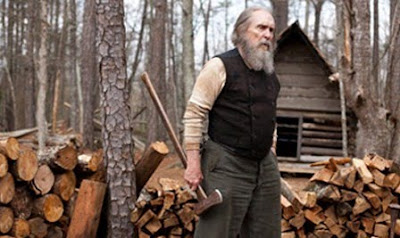
Duvall performs in one my most anticipated films of the year, a film with a great Oscar pedigree of Duvall, Bill Murray, and Sissy Spacek. Duvall plays a 1930s hermit who throws his own funeral. Duvall is pictured above in this film.

Sunday, March 21, 2010

The Best Years of Our Lives & Contemporary Period Piece

The Best Years of Our Lives

The Best Years of Ours Lives came out in 1946 and at the time of it's release was a contemporary film.

Yet it plays out like a period piece, by that I mean, it seems like director William Wyler took special care to make this film capture not only the stories of different men who return from war but to also capture 1946.

The camera seems to linger at times in a way period pieces sometimes do, creating a sense of time and place, paying attention to details of the time not just the characters and the story.

An example of this was a scene in the film where you watch the characters squeeze orange juice and later get it from the refrigerator. Pretty normal scene, but the way these extra details are included seems to make this film a study in 1946.

We also hear about the changes to general stores, feelings about the local pub, and a strong idea about the cost of goods, and post-war wages in America.

2009

I tried to think if there was any film from last year that captured 2009 in this way. I think the closest think this would be Jason Reitman's Up in the Air. This film captures attitudes about unemployment and the corporate experience while also lingering on details of elite status travel programs from companies like Hertz and Marriott.

I think there is something to be said about not just telling a modern story but filling it with modern details that can be appreciated down the road. A film like The Best Years of Our Lives really demonstrates that idea.

Saturday, March 20, 2010

Chris Evans: Is the Captain America deal a hot deal?

Word on the street has been that Chris Evans has been offered a deal with Marvel to play the anticipated role of Captain America (aka Steve Rogers) in the Avengers series.

In 2008, Nick Cassavette's was to be the director but now Joe Johnson is leading out on the project, but the role of Captain America remains uncasted.

I asked who should be cast in this role back in 2008, and feel like I threw out performers who were older than what Marvel was looking for, especially since Marvel is requesting a 9 movie deal.

It would appear that Chris Evans is the most recent victim of the intriguing offer.

In my mind, this puts a lot of eggs in every one's basket. It would mean Chris Evans, (already having played a Super Hero in Fantastic 4) would basically be signing the dotted line and defining his career by this role. Additionally Marvel would be putting a lot of responsibility on Evans not being a franchise bust (like Brandon Routh was to Superman).

I would think it'd be a tough call for Evans to make, it's a high profile role but I just can't get over the fact it's 9 films. Sure Evans would be gainfully employed, but this would become the framework for which has to be defined.

I'm not sure who else needs to sign the dotted line for the 9 movie, I know Samuel L. Jackson signed his name to the 9 movie contract to play Nick Fury for the Avenger film franchise...but it's really an incredibly ambitious project.

Other rumors floating out in Captain America land include Channing Tatum, Mike Vogel, and Garrett Hudlund.

Friday, March 19, 2010

Reel People: Julia Roberts is Elizabeth Gilbert

The film is Eat, Pray, Love popular memoir with the same title by Elizabeth Gilbert, with the same title. The film is written and directed by Glee & Nip/Tuck director/producer Ryan Murphy.

Elizabeth Gilbert

Gilbert was born in Connecticut in 1969. Her sister and parents grew up on a Christmas tree farm. Her father was a chemical engineer and her mother a nurse, and together they all had a love for reading and writing.

When Gilbert graduated from high school she attended New York University where she received a degree in political science in 1991.

After graduating she traveled around the country taking a variety of jobs and writing stories. Esquire published one of her short stories, Pilgrims in 1993.

By 1997, after writing for a variety of national magazines (SPIN, Real Simple, Allure, GQ) many of her travel experiences helped shaped the stories in her first book, a short stories collection called Pilgrims.

In 2000, one of Gilbert's GQ articles about personal experiences working at a woman run NYC bar became the basis for the film Coyote Ugly.

Gilbert also wrote a novel and a biography before her best selling memoir Eat, Pray, Love was published in 2006.

This memoir begins with Elizabeth explaining at 32 how despite her success how she was also depressed with her relationship with her husband Michael Cooper.

With an advance from Penguin house publishing the 32 year old began to travel telling the story we find in Eat, Pray, Love. The story in the year of Gilbert's life following the divorce of her husband and a failed relationship with another man named David. Gilbert decides to travel first to Italy for four months (Eat), then India for four months (pray), and then Indonesia for four months (love).

Elizabeth did end up remarrying a man named Felipe from Brazil who she fell in love with, and despite her opposition to marriage, ended up marrying him in order to help establish Felipe's citizenship. This is the topic of her most recent book Committed: A Skeptic Makes Peace with Marriage.

Elizabeth's husband Michael Cooper's side of the story is to be published in July of this year in the memoir The Husband: One Man's Story of Moving In, Moving Out, and Moving On.

Eat, Pray, Love

Eat Pray Love will tell the story of Elizabeth's travels as told in her very successful memoir.

Julia Roberts will play the lead part of Elizabeth, while James Franco will play her lover she had around the time of her divorce and following. Javier Bardem will play the part of her current husband Felipe. The film also features Billy Crudup and recent Academy Award Nominees Richard Jenkins and Viola Davis.

Audience loved the book and love Julia Roberts so this film will certainly be one of the successful films of summer.

Will Julia Roberts' portrayal of this wandering writer earn her critical attention and even an Oscar nomination/win for portraying this Real (Reel) Person?

Wednesday, March 17, 2010

Reel People: Naomi Watts is Valerie Plame Wilson

The film is Fair Game, directed by Doug Liman and adapted from Valerie Plame Wilson's memoir Fair Game: How a Top CIA Agent Was Betrayed by Her Own Government.

Valerie Plame Wilson

Valerie Plame was born in Alaska at Elmendorf Air Force Base April 19, 1963. Her father as a lieutenant colonel in the US Air Force, and there family eventually ended up in Pennsylvania where Valerie not only graduated from high school, but also attended Pennsylvania State University in 1985 with a BA in advertising.

Plame was interested in joining the CIA, as was her boyfriend and husband Todd Sesler. Plame's marriage to Todd Sesler was short, and it is believed that Plame's interest in the CIA exceeded that of her husband.

After joining the CIA she studied in Europe where among earning two master's degrees by 1991, she was also speaking French, German and Greek.

Plame as undercover in the CIA using her real name worked in a counter-proliferation role, in Athens and then in Brussels at the front company Brewster Jennings & Associates.

In 1997, her role was being shifted to working at Langley in Virginia. During this time she met former Ambassador Joseph C. Wilson IV, and because she couldn't reveal her identity to her husband early on and instead claimed to be energy trader based out of Brussels, Belgium. He was separated from his wife of 12 years, a French diplomat, and they began dating.

Plame did reveal her secret identity to Wilson and they got married to one another in 1998.

Wilson and Plame had twins, Trevor and Samantha in 2000. (Wilson had twins in his first marriage in 1975 as well).

Plame's work continued after giving birth traveling across Europe in a variety of top secret capacities, included managing spies and working to keep Iran and Iraq from getting nuclear weapons.

On July 14, 2003, Robert Novak named Valerie Plame in a column "Mission to Niger." This article effectively ended her career with the CIA.

It is believed that this information was provided to Novak as retribution for opinion articles that Joseph Wilson had written for the New York Times that claimed that George Bush misinterpreted information that led to the invasion of Iraq.

This became a giant investigation into the leak that led to Dick Chenney's chief of staff I. Lewis Libby, Dick Chenney's Chief of Staff which was taken to the court in United States v. Libby. The was convicted, but Bush commuted his sentence eliminating the jail time associated with his charge.

The Wilson's also filed a civil suit in 2007 against Dick Cheney, Karl Rove, Richard Armitage and Libby. This case was dismissed despite appeals. But was further discussed by the House Oversite Committee, that confirmed that sharing this classified information of her identity with the CIA was prohibited.

After Plame's identity was revealed, Valerie, Joseph and their two children moved to Palisades in Washington D.C.

Fair Game

Much has been written and discussed about this situation, and of course, the intrigue associated with CIA operations always makes these stories interesting but complicated at the same time. All the same, Valerie's memoir serves as a good tool for story telling although there has been efforts and lawsuits to block certain information into the story.

This film stars Naomi Watts as Valerie and Sean Penn as her husband Joseph Wilson.

Will Naomi Watt's portrayal of this exposed member of the CIA earn her critical attention and even an Oscar nomination/win for portraying this Real (Reel) Person?

Tuesday, March 16, 2010

Real (Reel) People Win Oscars: 2010 Edition

When it comes to win an Academy Award, recent years have shown that not any bio-pic performance means a guaranteed nomination, but if you get nominated for your performance playing a real person, then there is a good chance you will win.

Of the past 10 years (20 Lead Actor/Actress winners), 12 of these winners have won for playing real life people. That's 60% of winners since 2000.

• In 2009 Sandra Bullock played a surprise hero as the Southern mother Leigh Ann Tuohy and won for Best Actress.
• In 2008 Sean Penn played controversial politician Harvey Milk and won the Oscar for Best Actor.
• In 2007 Marion Cotillard played French singer Ediath Piaf and won the Oscar for Best Actress.
• In 2006 Helen Mirren played Queen Elizabeth II and won the Oscar for Best Actress.
• In 2006 Forrest Whitaker played Ugandan dictator Idi Amin and won the Oscar for Best Actor
• In 2005 Reese Witherspoon played country music celeb June Carter and won the Oscar for Best Actress.
• In 2005 Philip Seymour Hoffman played author Truman Capote and won the Oscar for Best Actor.
• In 2004 Jamie Foxx played musician Ray Charles and won the Oscar for Best Actor.
• In 2003 Charlize Theron played prostitute/serial killer Aileen Wuornos and won the Best Actress oscar.
• In 2002 Adrien Brody played Jewish pianist Wladyslaw Szpilman and won the Best Actor oscar.

• In 2002 Nicole Kidman played author Virginia Woolf and won the Best Actress oscar.
• In 2000 Julia Roberts plays the unlikely activist Erin Brokovich and won the Best Actress oscar.

The non-biopic winners: Jeff Bridges (Crazy Heart), Kate Winslet (The Reader), Daniel Day Lewis (There Will Be Blood), Hilary Swank (Million Dollar Baby), Sean Penn (Mystic River), Denzel Washington (Training Day), Halle Berry (Monster's Ball), Russell Crowe (Gladiator).

I will add films to this list as the post go up, but a few performances previously discussed appear to be 2010 eligible.

2010 Real (Reel) People Performances:

Reel People: Hiam Abbass is Hind Husseini
Reel People: Jesse Eisenberg is Mark Zuckerberg
Reel People: Colin Firth is King George VI
Reel People: James Franco is Allen Ginsberg
Reel People: James Franco is Aron Ralston
Reel People: Aaron Johnson is John Lennon
Reel People: Diane Lane is Penny Chenery
Reel People: Haley Joel Osment is Helmuth Hübener
Reel People: Julia Roberts is Elizabeth Gilbert
Reel People: David Strathairn is William J Flynn
Reel People: Hilary Swank is Betty Anne Waters
Reel People: Mark Wahlberg is "Irish" Micky Ward
Reel People: Naomi Watts is Valerie Plame Wilson
Reel People: Rachel Weisz is Hypatia
Reel People: Rachel Weisz is Kathryn Bolkovak


See the 2009, 2008 and 2007 Real (Reel) People projects.

Monday, March 15, 2010

Kate & Sam

I like Kate Winslet. I like Sam Mendes. And despite the lack of "celeb gossip" you typically find here at StrangeCulture, I must say something. I'm sad to hear that E!Online is reporting that they have separated from one another, as reported by a mutual lawyer, Keith Schilling.

All the same, I'm not surprised.

I thought I would quote a thought I shared in January 2009 after Kate Winslet's speech when she won the globe for Revolutionary Road:

In Winslet's win for Revolutionary Road her praise for Leonardo DiCaprio seemed to far outshine her praise for her director-husband Sam Mendes. It honestly felt a little uncomfortable. Sorry Kate...you can't love Leo "with all your heart" and also love your husband with all your heart as well.

--RC of StrangeCulture: 10 Thoughts on 66th Golden Globes Ceremony

I feel a little guilty for writing that now that they are no longer together, but there is something to be said for the way you speak about your spouse in public that people can see through, and it's too bad that it didn't work for this very talented couple.

Sunday, March 14, 2010

Weighing in on Health Care: Rationing & Increasing Health

The last thing the world really needs is one more person sharing their thoughts on health care.

America's health care reform effort, led primarily under the White House initiative of Barack Obama will certainly be the discussion of text book authors and college political science classes for ages.

Not just for the initiative and the results (whatever those may be) but because of the process, the successes, the failures, and the politics behind a health care bill that's page count grows by the month.

Yet for all the talk, the summits, and the discussion I continue to feel after well over a year of talk that the point of it all has been missed.

Health Care Rationing.

Whether we like the idea or not, health care is rationed. There is only so much health care that is available.

In some countries health care is rationed by money, if you have a lot of money you can get the health care you need, while the poor are without. In other places, government health care is provided, but certain services are excluded and only certain procedures are available to the general public, perhaps those deemed most medically accessory and involving life sustainability. And in other places, health care is rationed by systems that involve long waits in health clinics or on waiting lists to receive the prescribed services as available.

The fact of the matter is that health care like everything else is a limited resource, not a finite resource and the government wants to play a role in determining how health care will be divided out in a way that does not exclude people from the system simply due to market forces.

Of course, there in lies the debate. Most people are somewhere on the spectrum that would deny someone basic medical care because they have limited financial resources, but how does the system accommodate for this? What care should be provided to those who can't afford it, and how will it get paid for.

My thoughts, Increasing Health

Yet, here is were to me, the conversation has continued to get bogged down. When discussing policy (which is only part of the conversation, as so much of the conversation is about the process of passing the bill, rather than the policy that it will implement) the discussion focus on the what is distributed and how it will get paid for, operating under the mindset that health care is a fixed resource, not with the ability to increase or decrease.

Thinking economically, I wish that instead of just determining how to ration health that the conversation instead would focus more on how to increase health.

If there was more doctors, more medicine, more health care facilities, more nurses, more intellectual capital, then there would be more health, and the cost of health care could potentially decrease and be increasingly available so their would be a decreased need to ration and a decreased bottom line to cover the cost of insuring more people.

In my mind some of the key ways of increasing health would include making it more affordable for individuals to enter the medical field and to practice medicine. What if there were more scholarships at public universities that would allow people to get their degree in medicine to provide medicine in rural and economically depressed communities. If physicians didn't enter the field with thousands of dollars of medical debt they might be willing to work in less profitable fields for lower wages.

What if medical malpractice insurance was less expensive, and there was better caps on what doctors could be sued for? The cost of medicine would decrease dramatically.

Sure these are not final solutions, and there are aspects about the health debate that are messy but good conversations to have, but I think this component of the discussion is grossly ignored.

Instead of just looking to insurance companies, dollars and cents, who's covered, what's covered, and how's it covered, let's look beyond that. Let's look at how we can increase health, not just how we can divvy it out.

Thursday, March 11, 2010

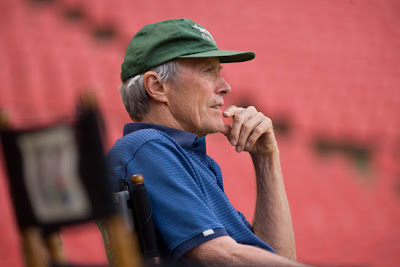
Clint, Cecile & Peter - Hereafter

When I look at the past 10 years and Clint Eastwood's has had a pretty robust catalogue of work...and because his past three films have made only limited impact on the award scene (and the social scene) part of feels like his name is less meaningful, as if he's working a film assembly spitting out movies left and right.

(Changeling, Gran Tarino & Invictus all had some success, but didn't seem to live up to expectations).

But I have to give the guy a break and there's something interesting to me about his next picture called Hereafter.

Part of it is Cecil.

Cecile de France is one of Eastwood's stars in his next film. I am curious in this role he's placed the Belgium actress in, because frankly, Eastwood's past films all seem heavily male, only Million Dollar Baby and Changeling had a female leads, and with award recognition for both of these leads, he might be underselling one of his skills.

So, what does it mean to see a female lead in Clint Eastwood's lens. This is no Space Cowboys, or film about classic cars, soccer players, cowboys, or modern day mobsters with baggage.

Rather Cecil de France plays a french television journalist who survives a natural disaster.

She's one of three main characters who story's collide in a Crash type format with a supernatural element. The other big name co-star is Matt Damon who plays the part of a psychic mechanic.

I'd be skeptical, but the film is written by one director who has demonstrated a true talent for telling stories, and recently seems equally as busy as Clint spitting out respectable projects like it's no big deal.
That screenwriter is Peter Morgan who has brought us recently The Last King of Scotland, The Queen, and Frost/Nixon (as well as the 2011 installment of James Bond)

Hereafter seems like a different project for Morgan (for starters it's not a biopic about English royalty, nor does it star Michael Sheen), and for that I'm excited.

Clint seems to have assembled an interesting crew and I'm interested see this trio particularly working together.