Sunday, November 24, 2013

Call The Midwife, Season 2 - Some Quick Thoughts

Sister Evangeline (Pam Ferris) and Jenny Lee (Jessica Raine)
A few months back I wrote about my thoughts on Season 1 of the BBC show Call The Midwife.

You can re-read the old post, but here are the highlights from that post:

  • Call The Midwife is a "girly show" (very female focused in terms of characters, writing, and themes)
  • Main character Jenny (Jessica Raine) is a unique character because she "observes" more than she "does"
  • Chummy (Miranda Hart) is really the most enjoyable character is Season 1, and all thought supporting is the most compelling and interesting character.
  • It's historically interesting to see how much has changed in a half dozen decades.
My wife loves it, and I can bare it, so I wanted Season 2. I have some new thoughts on the show having watched the second season.

The second season was a little bit of slow start for me, but it quickly picked up my interest. In a way Chummy (Miranda Hart) was such a tour de force type of performer in the firm season, that when she is absent for most of the second season, it allows some more subtle character actors to shine.

In terms of strong character performances, everyone seems to get a chance to take the main stage for a moment in season 2 (again, largely because the central character is not always super-active in the plot). 

I really found myself compelled by the story of the nuns in the second season. It's an interesting world created in this film with young single midwifes sharing a living space with a wide age-range of nuns. Nonnatus House in Poplar is such an interesting setting in this regard.

Sister Julienne (Jenny Agutter)
and Sister Bernadette (Laura Main)
Of course, central to the story is the exceptionally done work of Sister Bernadette (Laura Main), the youngest nun. But I also find myself really attracted to the characters of Sister Julienne (Jenny Agutter) who is a beautifully compelling character - who's overall personae of sensitivity mixed with control and insight is radically compelling. Sister Evangelina (Pam Ferris) is more hilarious than ever as a no-nonsense nun, and the aging Sister Monica Joan (Judy Parfitt), is compelling in her ways.

The characters here seem to find their place in the narrative, and in many scenes I found myself very touched.

Season 2 seems to deal with some more dramatic social issues, as well as changing times in East London and the world. 

Assistant Jane Sutton (Dorothy Atkinson)
and Rev. Applebee-Thornton (Jason Watkins)
Yet in the midst of all the social issues and heavy stories, by far my favorite episode and story of season 2 was the surprising story in Episode #2.4. This episode tells the story of nursing assistant Jane Sutton (Dorothy Atkinson) and Reverend Applebee-Thornton (Jason Watkins). Jane is this mysterious uber-shy nursing assistant who comes to Nonnatus House to replace Chummy (but with far different skills), and Rev. Applebee-Thornton is the most talkative person ever. Yet their combined awkwardness

creates a special TV-screen magic. Episode director Roger Goldby and episode writer Mark Catley did something special when they crafted this episode and story-line. 

So, if you can't read it my tone, generally I found myself far more engaged in season 2 than season 1. The themes were a little broader. But more than that, the characters were much deeper, and I found myself caught in this series, pleased it will return for a third season in 2014. 

12 Years A Slave

This weekend my wife and I saw 12 Years A Slave. It has a dramatic heaviness to it that I would compare to films like The Passion of the Christ, or Schindler's List. It's the time of film when you're watching it you know is important, but you have a hard time saying "you enjoy" because of it's brutal depiction of something real and horrid.

The true story of Solomon Northrup (previously outlined in a previous article) is a fascinating set up in itself -- a freeman from New York who finds himself kidnapped and brought into the hands of various slave owners in Louisiana. Yet, even still the story could have been told in a way that romanticizes the south, creates dueling sympathies or diminishes the harsh reality of slave life. Instead director Steve McQueen takes a no hold barred approach to telling the story.

I could speak of the artistic merits of the film, including great acting work specifically by Chiwetal Ejiofor, Michael Fassenbender, and Lupita Nyong'o. I could speak of Hans Zimmer's score, Joe Walker's editing, or John Ridley's screenplay adapted from the original source material. But do so, seems unimportant, sure as we move into Oscar season such discussions have a place. Yet, fresh after viewing it seems more important to think about the themes and thoughts in the film.

In the world of empowerment and entitlement, it might be easy with a limited history to think of someone in slavery and ask questions like "Why didn't the slave's stand up to the masters," or "why didn't more people in the free states do something about this." Or maybe you even ask "Didn't the slave owner's realize what they were doing was wrong."

These are all valid questions as long as you're willing to process through the answers. This film helps take you there to realize the challenge a slave (educated or uneducated) might have in standing up to a master. Similarly you see how the free states might have had a level of disconnectedness from the slave states in a way that they were in no place to challenge the culture, or truly see it and connect with it in a way that would have impact. Further, there's a real interesting picture of morality in this film, particularly the religious slave owners and their ability to quickly associate the slaves as property instead of people.
There are many disturbing scenes of loss, brutality, and the dehumanization of people. Yet one of the tamer scenes in the film follows the sale of Solomon Northup (or rather is slave name, Platt) by Ford (played by suddenly ubiquitous Benedict Cumberbatch). Ford clearly seems to pretend that he does not know that his slave is someone different than has been presented to him. He tries to do the right thing (such as keep families from being split up), but doesn't really try hard enough. Instead, he seems to hide behind the system and ideas of property. He has all the appearance of a good heart without the ability to take meaningful action.

What a challenge in this present time to think about. There are a number of social causes and I would be slow to compare hardly a single one with the horrible nature of slavery. Yet, I also cannot submit to the thought that slavery is a thing of the past. 

There are people today who are being treated and referred to as property in the world. In that, there are people that are treated to physical and sexual abuse, families are split up, and people are held against their will in the hands of owners who hold no true right to own another person.

It's a challenging place to wonder how you can know something is wrong, but with the assumption of it being far away or out-of-sight no how to address it. Whether it's sex trafficking, foreign slavery, or other forms of holding humans captive. How does one fight such a thing from a distance? Or when even if it's close you cannot know where it is to help stop it.

Slavery of another human is an awful thread we see throughout the history of the world, and yet it is easy for it to become historical instead of emotional. This film takes a horrible narrative of American history and presents it a way that seems very real, horrific, and sorrowful. A way, that the history taught in school does not present.

So when people ask "Was the film good," or "Would you recommend it," it's a challenging question -- because the questions don't even seem to apply. It's an important story that's hard to watch, put together in a very well done way. 

Tuesday, November 19, 2013

Oldboy (2003)

In the process of catching up on the iMDB.com top 250 films, I decided to watch the Chan Wook-Park 2003 film Oldboy.

I was specifically interested in this film because Spike Lee's remake is coming out in a few week's staring Josh Brolin. 

Watching this film, which is very stylized, creative, and more violent than my typical taste I still found myself captivated by the unique narrative and modern film style. The story deals with a man who has been locked up in a hotel-like room for 15 years, without knowing why he is there. During that time one of the things he does is reflect on his life and who he might have angered to lead to his capture. He documents tons of names, coming to a point of personal regret and anguish. Upon his release he tries to figure out who had captured him and seeks revenge.

It's one of those films where the set up is very controlled and the story places out methodically (but surprisingly) one scene-after-scene to it's final compelling climax with all the reveals and mysterious finally unraveled.

There has been talk for awhile for a remake with various cast members and directors. The new version staring Josh Brolin directed by Spike Lee certainly looks equally interesting and stylized. Watching the trailer it seems like Spike Lee has definitely taken the general tone, story and imagry that was associated with the initial film.
Will I watch the Spike Lee version? Probably not - knowing where the film is going takes away the intrigue for me, and I don't feel the need to watch this film again (even a different version). It's dark nature doesn't compel me to revisit it, at least anytime soon.  

Sunday, November 17, 2013

American Idol, Celebrity Status and The Wikipedia Test

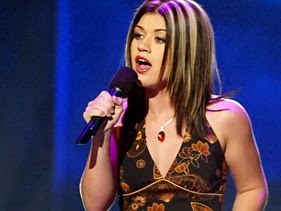
Kelly Clarkson Season 1 of American Idol
As a follow up to my post "The Voice, Celebrity Status and The Wikipedia Test" I wanted to follow up that post with one on American Idol. The side-by-side test isn't completely fair, but it just seems that while The Voice is more entertaining, American Idol spits out a higher percentage of stars...granted time is on the side of American Idol.

Additionally, I'm only going to look at American Idol winners, although I would freely say that runner's up in the award show have largely done better at making the celebrity conversion. Perhaps, due to the ability to do so with more flexibility (famous non-winner's excluded here include Clay Aikin, Bo Bice, Kaherine McPhee, Adam Lambert, Jennifer Hudson, Chris Daughtry, Kellie Pickler).

Notable for Idol, compared to The Voice, is that Idol seems to give artist a chance to become celebrities, and the artist release singles and albums quickly to get some quick lift off their win, that seems to really help carry them to success.

Here's the Wikipedia Test: If the winner's wikipedia page is primarily about their careeAmerican Idol, they have a current "fail" status of moving into celebrity status based on their post-win career.
r during before or during

Kelly Clarkson (Season 1 winner, 2002): *SUPER WINNER* Kelly's page is hardly about American Idol at all at this point, most of her page discusses many post-2002 events/successes.

♪♪ Ruben Studdard (Season 2 winner, 2003): *WIN* He followed up his Idol win with a Grammy nomination and has five albums, singles, some weak direct-to-DVD filmography, and now as a contestant on The Biggest Loser.

♪♪♪ Fantasia Barrino (Season 3 winner, 2004): *WIN* Fantasia continues to work the scene, releasing albums and even won a Grammy in 2011 (Best R&B Vocal Performance for "Bittersweet").

♪♪♪♪ Carrie Underwood (Season 4, winner 2005): *SUPER WINNER* Carrie's wikipedia page is not about American Idol - the multi-Grammy winning artist is a huge success, a success in the past 8 years that fills her Wikipedia page. No one cares what song she sang an Everly Brothers song on 60s week or a song from The King & I on Broadway week - this isn't what her page is about.

♪♪♪♪♪ Taylor Hicks (Season 5, winner 2006) *Fail* Even the sections on his Wikipedia page that aren't about American Idol mention American Idol (i.e. a section title post-Idol career). If Idol defines his career still, I'm calling it a fail - although Hicks has had some albums and exposure in the past 7 years.

♪♪♪♪♪♪ Jordin Sparks (Season 6, winner 2007) *Win* Awards, albums, filmography, philanthropy...it's more than Idol.

♪♪♪♪♪♪♪  David Cook (Season 7, winner 2008) *Mixed Bag/Too Close To Call* It's about 50/50 Idol and post-idol. I'm calling this one too close to call.

♪♪♪♪♪♪♪♪ Kris Alan (Season 8, winner 2009) *Mixed Bag/Too Close to Call* Like David Cook, it's about 50/50 Idol and post-idol. I almost called it a fail there's quite a bit of text about his two albums to-date and his philanthropy. Give it a year or two and he might tip to the win category.

♪♪♪♪♪♪♪♪♪ Lee DeWyze (Season 9, winner 2010) *Fail* With non-successful albums it's almost all about Idol, even his award section is his Teen Choice Award win is for Best Reality/Variety Star.

 ♪♪♪♪♪♪♪♪♪♪ Scotty McCreery (Season 10, winner 2011) *Mixed Bag/Too Close to Call* I think he can tip to the win category. He's working it with his third album out just a month ago, he's getting out their hustling. The star-events haven't really happened yet, so the page is mostly about Idol.

 ♪♪♪♪♪♪♪♪♪♪♪ Phillip Phillips (Season 11, winner 2012) *Mixed Bag/Too Close to Call* His page is one of the shortest of the bunch (if not the shortest). But since it covers awards, and his song "Home" was very popular, I can't trully call it a fail. We'll see if time allows him the change to tip the scales to the win category.

 ♪♪♪♪♪♪♪♪♪♪♪♪ Candice Glover (Season 12, winner 2013) *Too Early to Tell* A couple singles, but she's still super fresh off her idol win, let's see what happens.

The Voice, Celebrity Status, and the The Wikipedia Test

Javier Colon - Season 1 Winner of The Voice
Sometimes I get a little fatigued by award competition shows. But, maybe you're like me...if you start watching one, you are often "hooked" to some degree.

For that reason alone, I avoid them. But this season my wife and I are watching The Voice. Not every minute of every episode...but most episodes.

I'll admit, I prefer The Voice, to most comparable shows (such as American Idol, X-Factor, etc.) but one of the things that perplexes me is the lack of true stardom that have come from any of The Voice winners. I understand if all, or even most don't bust through in some way, but four winner's so far and relatively limited star power for a widely followed show.

That said - in doing my review and thinking about this topic, I've also come to the conclusion that they're not giving their victors enough time to experience any success as reigning winner before spitting out a new winner.

So here it's is....I thought I'd put The Voice winners to the test with what I'm calling The Wikipedia Test.

Here's the test: If the award show contestant's Wikipedia page is primarily about The Voice (or before The Voice) or about what they've done after The Voice. Of course, time could change this.

♪ Season 1: Javier Colon (winner 2011). *Fail* he had more albums (3) before he won The Voice (0). His career section is all pre-winning The Voice. His page is all about The Voice and career before The Voice.

♪♪ Season 2: Jermaine Paul (winner spring 2012). *Fail* he was nominated for a Grammy in 2006, best performance by a duo or group with vocals for a collaboration with Alicia Keyes "If this World Were Mine." Since the voice he has not released an album - although does have a tentative album called "Finally." His page is almost all about The Voice.

♪♪♪ Season 3: Cassadee Pope (winner fall 2012). *Too Early/Too Close to Call* Cassadee Pope's wikipedia page is very pre-Voice and during The Voice. But let time play out on this one, she did release an album in October 2013 called Frame by Frame, which debuted at #9 on the Billboard 200, and #1 on the top country albums. CMT did a documentary as well about Pope's post-Voice journey.

♪♪♪♪ Seasion 4: Danielle Bradbery (winner spring 2013). *Too Early to Call* It's not fair to judge Danielle about her post-Voice career since she only won months ago. Danielle is going to be the quickest CD released album The Heart of Dixie - in fact, her single with the same title was released in July and has already had some good radio airplay.

See how these artist compare to the winner's to-date of American Idol here: American Idol, Celebrity Status and The Wikipedia Test 

Sunday, November 10, 2013

The Deer Hunter

I finally saw The Deer Hunter. I don't really know what I expected, but it wasn't this.

Most of what I heard is about the young cast that has become so famous (primarily Christopher Walken, Meryl Streep, and Robert DeNiro). 

For starters - the film is long...why must so many "classics" clock in at well over an hour (this film 3 hours, 2 minutes - in my book films get extra points in they can tell an incredible story at the 1 hour 45 minute mark). 
But apart from the length, the way the film plays out, ends up being primarily three acts - at home pre-Vietnam war, at war, and back at home. In the name of character development and film message, the first act is surprisingly long dealing with a group of men/boys celebrate together as one friend is getting married on the eve of being deployed to Vietnam. The scene's are long character development scenes - basically showing that these are immature fun loving guys in a small time. There's a hunt/road trip scenes, a wedding scene and bar scenes. I found these scenes a little long, but enjoyable namely because of the all-star cast performing in these youthful roles.

Yet what really tips this film into intense land happens when they ship off the Vietnam. These scenes are heavy and gritty. The scenes themselves are nothing like American Beauty, but the film gives me the same feeling I had watching that film -- kind of an overwhelming sense of desperation and sadness that comes from such a gritty portrayal of human kind.

As the film plays out through this second act, it's just generally heavy and overwhelming. The third act is a mixed bag of heaviness and resolution of story lines. 

I think my end feeling watching this film is still admiration for the young celebrity cast. Also, the film obviously has powerful scenes, especially in the ways I can see how this film colors later portrayals of the Vietnam war. 

Yet, when all is said and done my struggle with this film comes back to the construction of the film that makes it so long, with a relatively non-complex story and moderately sized cast. This doesn't make it a bad film, but one that's a little harder for me to get excited about.

This film is another recommendation in response to my unwatched iMDB.com top 250 film list. This recommendation came from both @jdreed and recommendation of General125. Must admit, glad to cross this film off the list - it's been on my watch list for too long.

Tuesday, November 05, 2013

Anatomy Of A Murder

Anatomy Of A Murder is an interesting film to watch in 2013. I can't necessarily imagine what it would be like to have watched an involved court room drama in 1959 that dealt with topics of rape, temporary insanity, abuse, and court room manipulation. These topics are still a part of our current television and film landscape.

Yet watching Jimmy Stewart in an old film which regularly discusses "rape" and "panties" is, even in a semi-sterilized in 1959 sort-of-way is still kind of strange, and well...not that enjoyable.

Clocking-in at two hours and forty minutes the films a little bit of a beast to watch. In trying to understand the high praise for the film, it seems that the film's marks tend to deal with the realism of the court room presentation, and the challenging (and real) presentation of weakness in the American justice system.

Yet, personally, I had a hard time really enjoying this film in any sense. There were a few times when the court room realism was interesting. In terms of performances, I enjoyed seeing Jimmy Stewart's last of five Oscar nominated performances. Yet, a film that challenges the nobility of the lawyer craft isn't high up on my personal watch list.

Would I recommend this film? Probably not. Can I respect it, sure. But, here are two courtroom films from the same time period I enjoy so much more and highly recommend (incidentally both featuring Marlene Dietrich):

  • Witness For the Prosecution (1957) directed by Billy Wilder based on the Agatha Christie short story and play staring Marlene Dietrich and is far more gimmicky than Anatomy of A Murder, which is fine with me. I enjoy the gimmicks.
  • Judgment at Nuremberg (1961) directed by Stanley Kramer with a complex script about the post-WWII military tribunals. The film is very serious and captivating, a powerful once in a lifetime experience that is even longer than Anatomy of a Murder, but worth each minute. So many powerful performances as well...Spencer Tracy (Oscar nominee, Best Actor), Burt Lancaster, Marlene Dietrich, Maximilian Schell (Oscar winner, Best Actor), Judy Garland (Oscar nominee, Supporting Actress), Montgomery Clift (Oscar Nominee, Supporting Actor) and William Shatner.
So, if my feedback on the film leads me to talk about two films I like more...well, that in itself says something. Watch the other two films, not this one.

This film was watched by recommendation of General125 in response to my post What I Haven't Seen on the IMDb Tom 250 Film List, but he disclosed via twitter that he meant to recommend Dial M For Murder not Anatomy of Murder. So much murder...it can get confusing.

Monday, October 28, 2013

In The Heat of The Night


In the Heat of the Night came out in 1967 and won the Oscar for best picture. It's hard to believe that this film competed against other classics Guess Who's Coming To Dinner, Bonnie and Clyde,The Graduate (and oh yeah, Dr. Doolittle).

I've seen the clip "They call me Mr. Tibbs." hundred's of times and it was great to see it in context. In fact, this film has a really great rhythm about it that makes it very easy to watch. Many film editors could benefit by putting a semi-involved multi-character story together in this less than two-hour format.

The story has a nice complexity, with mild grittiness, but more than anything else while watching it I can't imagine what it would be like to have watched this film in 1967 in the heart of the civil rights movement. The feelings and emotions one might have watching this film in a "live context," had to be so much stronger and moving. Certainly certain parts of the film made different people uncomfortable at different points. Whether it's a intimidating fight scene, the scene with the wealthy man (Larry Gates as Endicott) slaps Virgin Tibbs (Sidney Poitier).

The film is obviously a message-oriented film about a nations racial divide, but I think what sticks out to me in a modern viewing is the new stories we hear about exonerated death row inmates and overturned convictions. In the course of this film many people are accused or potentially charged of one single-crime in Sparta, Mississippi. The film shows a dedicated Mr. Tibbs and a police captain who's quick to arrest but also quick to change the charge (Rob Steiger in his Academy Award winning roles as Gillespie).

I think police procedural films typically make better TV than films because it's hard to make the film version of something we see all the time on TV seem "special." But this is special, because there is true character arch. A larger arch in Rob Steiger's Gillespie, but a similar arch also is in the character of Virgil Tibbs as well. The film is complex, challenging (more so in the past than in the present), and has a unique feel (I think of the smacking gum of Gillespie, the opening shot of the fly on the dirty calendar, the unique use of music, or some unique minor character twist).

Norman Jewison's direction here is fantastic, and I certainly have no complaint even in the midst of the other great films that this film was the Oscar winner. I can't quite figure out how Poitier got left out of the best actor race, but those things sometimes only make sense in the time of the competition and are hard to understand out of the context of the time. In The Heat of The Night is a win in my book, particularly it's tightly-written story, brave direction, and great performances.


I'm really glad I watched this film - motivated by the recommendation of friend via twitter @jdreed after my post What I Haven't Seen On the IMDb top 250 Film List, incidentally at the time of posting the film was ranked 250 and is currently no longer in the top 250 film list just a week or so later.

Saturday, October 26, 2013

The Intouchables

The French make some great films, but when I think of "French cinema" I often have images of snobbery or artistic-sometimes-inaccessible films. That is not the type of film that The Intouchables is. The film directed by Olivier Nakache and Eric Toledano was released late in 2011 in France and has become one of France's biggest box office successes, won many awards and nominations, and is in general just a big French hit.
The Intouchables is a comedy drama that seems like many popular American Comedy dramas. In fact, it generally seems very American, and if made in the US would likely have been a success here as well. I mean, the lead actors could have been played by Robert De Niro and Derek Luke, since...well, when I first saw the cover that's who I thought starred in the film.

The film, based on a true story, is about a wealthy quadriplegic man in search of a caregiver who hires a young troubled man who interviewed simply to evidence an effort applying for a job so that he could get his government benefit.

The film is very comedic, and very heartwarming. One of the things that you'll notice in the pictures selected for this post or any pictures for this film is that the characters are smiling. That's because most of the film they're having fun and learning how to experience life together. Lead actors François Cluzet and Omar Sy do an incredible job at becoming these interesting and believable characters.

One of the main messages of this film is that the quadriplegic character, Phillipe is still a person who can experience life despite his physical limitations.

There's hilarious scenes in the juxtaposition of the two characters who are different in so many ways: life, socioeconomic class, music interest, interest and everything in between. Yet, it's not just a "look I like classical music and you like dance music" type of film (although this scene is very funny), but it's the way that they comedy continues to unroll in new ways through the whole film, in surprising and unsurprising ways such as the opening scene where they fake a need for hospitalization to get out of a traffic ticket.

I think this is a really great film, and one that many people could enjoy. It's good to watch a film where people find joy and happiness despite their circumstances and that people who normally wouldn't connect find community together with one another in powerful and meaningful ways.

This film is one of the imdb.com top 250 films I recently mentioned I had not seen, glad I have now seen it. 

Monday, October 21, 2013

Incendies: I Want To Recommend It (But to Who?), Powerful Intro and McGuffin

I just watched the movie Incendies - a 2010 film, nominated for an Academy Award film in 2011 for best foreign language film (from Canada, film is in Arabic and French).

I have so many thoughts on this unique film that takes some unique turns as it tells the story of two young adult children (twins) who are confronted with the truth of their mother's past when she dies - leading them to her homeland in a place resembling Lebanon.

Here are some quick spoiler-free thoughts.

I Want To Recommend It (But to Who?)
This is the type of film that you want to talk to someone about after they see. It's also a little off the map for most typical viewers (not a lot of people picking this up at Redbox, if you know what I mean).

But the question I have is, who would I recommend it to. The film is smart, heavy, foreign and intense. It's heaviness and intensity doesn't mean it's inappropriate -- they film is pretty sensitive in it's handling of heavy content in the sense that it's not overly profain and doesn't have overly sexed content. Yet for a film set up with a thriller-like format, it's has a heavy feel with heavy themes (like fighting between Christians and Muslims in the Middle East, among other themes).

If you want to give something off the map for you a try, and haven't watched this - I recommend you settle in for this film and give it a chance. Director Denis Villenueve did something very special with this film.

A Powerful Intro...
So I've mentioned, I don't really want to give away any of the plot points, so instead, I figured I would talk about the intro. Here is a clip of the intro which uses Radiohead's song "You and Whose Army?" In a remarkably powerful way.

Consider this a preview of the film.


... Followed by a McGuffin

A McGuffin is defined as an object or device in a movie or book that serves merely as a trigger for the plot. This film has a mighty good McGuffin that plays out fantastically in the film. Since I'm try not to overly explain the plot so that I don't steal it's unwrapping for you I will share the initial McGuffin (that quickly follows the opening sequence above).

An immigrant woman dies. Her long-time boss, a public notary, is administering her will in which she splits her wealth, lays out some strong request in how she wants be buried. Her burial request is very undignified, including no headstone until her children fulfill her last request which is to deliver to letters. Her daughter is to take a letter to her father (a man she doesn't know or know anything about, including his name). Her son is to take a letter to their brother, a brother than neither of the twins know about either. A crazy request, that triggers the quest.

And with that it begins, and the powerful film unfolds. Is this film for you? I don't know - but if you're at all intrigued. Get your hand on this film.

This film is one of the IMDb.com top 250 films I had not yet seen - so glad to have seen it!

Saturday, October 19, 2013

What I Haven't Seen on the IMDb Top 250 Film List

I personally really enjoy the imdb.com top 250 film chart.

I feel like it always skews a little heavy towards genre films. Films like The Dark Knight is probably over-rated at number 6 of all time. I always thing there's a high number of anime films on the list. I always kind of assume genre films (whether it's sci-fi, foregin films, action films, silent films, westerns, etc.) will get some over representation since people uninterested in these genre's aren't throwing their votes into the pot. But that's okay with me because these films are probably under represented from their fan base, and this is a great place to try to capture the best of the best and mix them all together/

All that said, it's great because it's current - often capturing "new classics" very quickly. For example, the list currently has two films from 2013, Gravity and Rush. The list quickly captures the potential for these films to become modern favorites.

I reviewed the list this morning to see with the current list which ones I haven't seen, and potentially should add to my should watch list

I have seen 188 of the 250 current imbd.com top films.

So, here's the 62 films I haven't seen: [A list that could be embarrassing to compile for someone who talks about films - but I don't mind admitting I haven't seen every film - including some current and classic films] What films on  my "haven't seen list" would you consider "have to see films?"

Tell me in the comments which of these films I have to see, and why - and I will do what I can to make it happen.

22. Once Upon a Time in the West (1968)
35. Terminator 2: Judgment Day (1991)
41. Gravity (2013)
51. M (1931)
52. Paths of Glory (1957)
55. The Intouchables (2011)
56. Django Unchained (2012)
67. The Great Dictator (1940)
74. The Treasure of the Sierra Madre (1948)
77. Once Upon a Time in America (1984)
85. Oldboy (2003)
93. Princess Mononoke (1997)
95. Bicycle Thieves (1948)
104. Die Hard (1988)
107. Yojimbo (1961)
111. For a Few Dollars More (1965)
115. The Great Escape (1963)
117. Mr. Smith Goes to Washington (1939)
119. Heat (1995)
121. The Kid (1921)
127. Ikiru (1952)
135. Touch of Evil (1958)
136. The Gold Rush (1925)
137. The Deer Hunter (1978)
139. The Hunt (2012)
140. Diabolique (1955)
141. Lock, Stock and Two Smoking Barrels (1998)
146. Casino (1995)
151. Sin City (2005)
152. Strangers on a Train (1951)
154. Kill Bill: Vol. 1 (2003)
157. The Grapes of Wrath (1940)
161. V for Vendetta (2005)
163. High Noon (1952)
165. My Neighbor Totoro (1988)
168. Dial M for Murder (1954)
172. The Terminator (1984)
185. Rush (2013)
188. Howl's Moving Castle (2004)
193. Mary and Max (2009)
195. The Killing (1956)
196. Black Swan (2010)
198. Persona (1966)
199. The Exorcist (1973)
201. The Hustler (1961)
203. The Man Who Shot Liberty Valance (1962)
206. Anatomy of a Murder (1959)
210. 8½ (1963)
214. Barry Lyndon (1975)
215. Fanny and Alexander (1982)
216. The Wild Bunch (1969)
217. Stalag 17 (1953)
221. Harry Potter and the Deathly Hallows: Part 2 (2011)
222. All Quiet on the Western Front (1930)
223. A Fistful of Dollars (1964)
228. Memories of Murder (2003)
230. Sleuth (1972)
232. Ip Man (2008)
237. Stalker (1979)
240. La Haine (1995)
242. Incendies (2010)
243. Nausicaä of the Valley of the Wind (1984)
246. Papillon (1973)
250. In the Heat of the Night (1967)


Note: I will attempt to update the films on this list with links if I watch the films and post about them. 

Friday, October 18, 2013

Lawless - Could've (Should've) Been Great

Shia LeBeouf as Jack Bondurant in Lawless 
One of the movies of 2012 that sort of peaked my interest was the film Lawless. Well, let me clear...the film peaked my interest when it was called The Wettest County in The World. The film, based on the book The Wettest County in the World by Matthew Bondurant.

The book, histroical fiction is written by Bondurant based on stories and photographs of his grandfather and great uncle in Franklin County, Virginia during prohibition.

When I read the book I enjoyed it and wrote my observations, and in many ways found myself having some similar reactions to the movie. In a way, the book was too smart, written with too many characters that it was often a little challenging to connect to the plot lines that were being established.

Yet the film should have succeeded. It could have overcome these challenges because the characters might be able to keep track of in film, the narrative could be reconstructed to be chronological instead of written in a mixed up order from different perspectives as it was done in the book.

And yet, while the film dealt with the challenges of some of the complexity created by teh book it made a fetal mistake - it never made an effort to give the viewer a reason to connect to the story being told in the film.

The film was under such talented craftsmen (notably director John Hillcoat, screenwriter/musician Nick Cave, and editor Dylan Tichenor), and the casting was near perfect. Every character was perfectly cast, couldn't imagine it being done better (A list cast who fit the characters perfectly, including Tom Hardy, Guy Pearce, Jessica Chastain, Shai LeBeouf, Jason Clarke, Mia Wasikowska and Gary Oldman).

Yet,what I thought made the book work was the magic of the historical setting and the recreation of something very real and personal to the author. This is something that the film would have of course had a hard time capitalizing on. Similarly, the book created intrigue with it's unique back and forth through time, when the movie logically decided to go with a less scattered narrative.

All the same, the film never told you why you cared. Who were you cheering for, and why? What keeps you engaged and watching? What will create resolution? I can appreciate the effort not to create a formula driven plot narrative, but the film did very little to catch the viewer overall into any sort of character or pplot driven goal/challenge.

In fact, I have this feeling that many people after watching the film would identify different characters as the main character. This same challenge is in the book as well, but in the book the first person narrative shifts allow you to read the story following many characters. In the film, they would have benefited from a greater focus on a single character, allowing some of the well crafted narrative to slip into the background.

So often you watch film adaptations of books and think "but they forgot this main part" or "character arch" and in Lawless you see exactly why book-to-film adaptions leave out some details and character arches. Because here, they are all put into the film, and less would have probably been more.

I have a feeling we will see more collaborations of John Hillcoat and Nick Cave. This was there third feature length film collaboration. The previous where Ghost...of the Civil Dead (1988), and The Proposition (2005). And while I think there work is not dismal it has unfound potential, and in the case of Lawless so much of the problem was on creating a connection between the film and the audience. It wasn't technicality that was missing, but rather emotion. I want this team to try again, because I think they could real make something amazing if they can take all their technical skill and artistry and find a way to speak to their audience. I trully believe Lawless could have (and should have) been great. But instead it missed the mark.

Wednesday, October 16, 2013

Paul McCartney Quote - Everybody Else Is Busy Doing Better than Me

There's a lot of me in that. No matter how famous, or no matter how accomplished or how many awards you get, you're always still thinking there's somebody out there who's better than you. I'm often reading a magazine and hearing about someone's new record or seeing something and I think, "Oh, boy, that's gonna be better than me." And it's a very common thing.

-- Paul McCartney talking to NPR's Robert Siegel (aired October 15, 2013) about his inspiration behind the song "Alligator" from his album released yesterday called New.  The lyrics to the song include the line "Everybody else is busy doing better than me."

Monday, October 14, 2013

Columbus Day, Mail, Stamps and Macy's

I don't know exactly why, but I definitely felt the presence of "Columbus Day Today." One of those ways I felt it was when I checked the mail this evening.Nothing...oh yea, Columbus Day.

It made me think of all the conversations about the rising price of stamps (potential 49 cents for first class come mid-January, 2014).

I'm not a big fan of rising prices of stamps...since there's so many alternatives and it seems like something kind of special (like a birthday card, a paper invitation to a party or even a simple letter in the mail) has an increased cost and other options (eChristmas cards, anyone?) seem more viable.

One of the conversations that has come up over the years is whether the US Post Office could benefit from cutting service...say no Saturday mail, or even a mid-week day. I admit, I don't love the idea, but I might be willing to make the sacrifice.

That said, cutting service could also open up more opportunities for other private providers who've managed to make mail financially viable...which is important in the world of online retailers.

So, it's hard to say where cutting mail service really fits into the picture. Not to mention, I understand the legal policies that surround the mail (for example, laws that allow people to be noticed by first class mail, with a certain assumption of reasonable mailing times).

If you ask me, the real problem with the US Postal Service is not Saturday delivery, or even rising prices, but a customer focused business model. I've seen USPS commercials on TV with smiling faces, but I don't see those same faces at the counter...ever. It's like visiting the DMV or Social Security Office more than visiting a business.

Yet, if it made sense, I would be okay with less days of service.

Although, I think when people would get really itchy about less mail would be around the holidays. Checking the mail has become increasingly important as you time out the receiving of online purchases in the mail, to wrap them up consolidate with other gifts and mail back out again. Some times you need as many days of mail service as you can get.

I expect that the conversation of online retailers and brick and mortar retailers comes up again in the news this holiday season. I've heard the rumblings, especially with the announcement of Macy's opening on the evening of Thanksgiving this year.

SeaWorld Float Sketch found here
I think it's too bad that Macy's has to do this. I really do. Sure they'll be some backlash, but how much can it really be - we've seen other retailers do it to, and that's too bad too. They claim that they need to compete with the online retailers...although, of course...retailers like Macy's also have online presences, so it doesn't completely make sense.

Speaking of Macy's potential controversy, I got an e-mail tonight from the people behind the documentary The Cove with the details of their upcoming media blitz against Macy's. The concern of "The Cove People" is the Macy's Parade new SeaWorld float supports ocean animal captivity. So the social media blitz is to begin shortly. Way to go Macy's for staying out of the bad press zone.

Happy Columbus Day, whatever that means to you.